
IT support for Townsville law firms and accountants, built around keeping client confidences
Tech TroubleShooters looks after IT for law firms, accountants, tax agents and bookkeepers across Townsville and North Queensland. We protect client files and email, make fake invoice and bank detail scams much harder to pull off, and keep you running through settlement days and tax time. You deal with Kelly or Carisa, people who understand that in your work, a client’s trust is the whole business.
The emails that keep partners up at night
- “A client nearly paid a fake invoice that looked exactly like ours.”
- “Two of us use the same login for the ATO portal. Is that a problem?”
- “It’s the last fortnight of October and everything’s running slowly.”
- “One of the partners wants to work from home a couple of days a week.”
- “We’ve been told the new anti-money laundering rules apply to us. What does that mean for our IT?”
Your clients hand you their bank details, their tax file numbers, their divorce, their business sale. They assume it’s safe. Most of the time the risk isn’t a hacker breaking in through the firewall. It’s one convincing email, one shared password, or one laptop left on a plane.
What the rules expect, in plain words
A plain-English summary, not legal advice. You’ll know your own professional rules better than we do. This is how they land on your IT.
Lawyers have a duty of confidentiality. Rule 9 of the Australian Solicitors’ Conduct Rules, which apply in Queensland, requires solicitors to keep client information confidential. The Queensland Law Society’s guidance treats reasonable cyber security as part of meeting that duty, with steps like multi-factor sign-in, anti-phishing training and controlled remote access.
Tax and BAS agents have a confidentiality obligation too. The Tax Practitioners Board’s Code of Professional Conduct requires you to keep clients’ information confidential. The TPB considers encryption best practice where possible, and it doesn’t recommend sending or receiving identity documents by email.
The ATO portal is one person, one login. Each person using online services for agents needs their own Digital ID, authorised in the ATO’s access manager. Logins and devices shouldn’t be shared, and you need to report suspected compromise straight away.
The Privacy Act may reach you sooner than you think. Businesses over $3 million turnover are covered. Smaller firms are often exempt, but not for everything. Since 1 July 2026, many lawyers and accountants providing certain services have AML/CTF obligations. Reporting entities must follow the Privacy Act for those activities, whatever their size. If you’re covered and a breach is likely to cause serious harm, the Notifiable Data Breaches scheme applies.
ASD Essentials is the benchmark. It’s the Australian Signals Directorate’s successor to the Essential Eight, launched 15 October 2026. If your professional indemnity or cyber insurer still asks about the Essential Eight, that’s still valid during the transition.

How we protect a firm like yours
Fake invoice and bank detail emails stopped early. Email filtering catches most impersonation attempts before they land, and DMARC set-up makes it much harder for scammers to send emails that look like they came from you. We’ll also help you set one simple rule: bank detail changes get confirmed by phone, on a number you already had. See email security.
Two-step sign-in on email and every system holding client files, so a stolen password isn’t enough on its own. See multi-factor authentication.
Separate logins for everyone, on your computers, your practice software and the ATO portal. When someone leaves, we remove their access.
Laptops that are safer to take home. A secure way back into the office systems, two-step sign-in, and laptops kept monitored and patched like the office computers. See secure remote access.
Encrypted backups kept in Australia, so a ransomware attack or a dead server doesn’t cost you years of client files. See data backup.
Managed IT that works quietly in the background: monitoring, updates, drive health checks, and security that stops ransomware by watching behaviour rather than relying on shop antivirus. See managed IT.
A plain-English monthly report of what we updated, checked and blocked. Useful when a partner or your insurer asks what you’re actually doing about cyber risk.
What we’re not
We’re not your AML/CTF compliance adviser, and we won’t tell you how to run your trust account. Your program, policies and professional judgement stay yours. Our job is making sure the IT underneath them is solid, and explaining it in words you can put in front of a partner meeting.
Who looks after you
Kelly Hunn has been fixing IT for more than 30 years, and Kelly and Carisa have run their own business since 2006. It’s Kelly or Carisa, every time, which also means fewer people with access to your systems. Usually one of us answers straight away. If we’re driving or on a job, we’ll call or text you back, usually within the hour.
Managed IT clients get 24/7 support at no extra charge, handy when it’s late in tax season or the night before a settlement. Not a client yet? Call any time. After hours we’ll get back to you as soon as we can, but we can’t promise to start straight away.
We support firms across Townsville and out to Ayr, Ingham and Charters Towers, and most problems can be sorted remotely. No lock-in contracts unless you ask for a set term.

Questions firms ask us
How do we stop fake invoice and bank detail emails?
Use layers. Email filtering catches most fakes before they arrive. DMARC makes it much harder for someone to send email as your domain. Two-step sign-in stops stolen passwords being used to send from your real account. And a firm rule helps: any change of bank details gets confirmed by phone, on a number you already had.
Do the new AML/CTF rules change anything for our IT?
They can. If you provide services covered by the AML/CTF changes that started on 1 July 2026, you must follow the Privacy Act for those activities, even if you’re a small business. That makes protecting identity documents and client records more important. Your compliance adviser or professional body can confirm whether your services are covered.
Can two of us share an ATO portal login?
No. The ATO requires each person to use their own Digital ID, authorised through its access manager, and logins and devices shouldn’t be shared. We can help set up separate access for everyone and tidy up who can see what.
Is it safe for staff to work from home with client files?
It can be, if the laptop is kept up to date and protected, sign-in uses two steps, and files are reached through a secure connection rather than emailed home or copied to a USB stick. We can help set that up.
Is cloud storage OK for client files?
Often, yes, as long as you know where the data is kept, who can access it, and that it’s encrypted and backed up. The TPB has guidance on cloud computing for tax practitioners, and we’ll go through the practical questions with you before you move anything.
The faces on this page are the people who answer the phone. Odd thing to have to point out, really.
The same two people look after every firm we work with. So in month six, you're still not explaining your setup to a stranger.
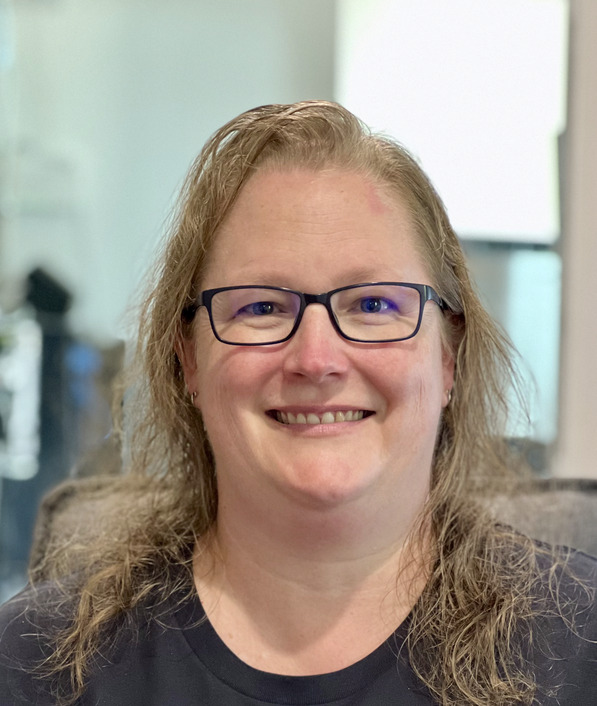
Carisa
The calm voice on the other end when things go wrong.

Kelly
30+ years fixing IT. Has seen most problems before, some of them twice.


Usually one of us answers straight away. If we're driving or on a job, we'll call or text you back, usually within the hour.
Managed IT clients get 24/7 support at no extra charge.
We put our own mobiles on the website. Most IT companies would rather not. That's sort of the point.
Tell us what's bugging you.
Talk it through with Kelly or Carisa. They’ll ask about your email security, logins, backups and remote access, and tell you plainly where the real risks are and what can wait.
No lock-in contracts. If we stop being good, you're free to go. We'd rather you didn't.
Leave your number and Kelly or Carisa will call you back, usually within the hour, and within one business day at the latest.
Busy? We'll ring you.
Leave your number and tell us what's not working. We'll take it from there.